
 JUST A FEW MINUTES?
Treating Prisoners Like Patients
A scientist from Indonesia in the South China Sea, named Hashem Al-Ghaili, has revealed a plan that could rehabilitate a convicted person in minutes, instead of spending years or decades in prison.
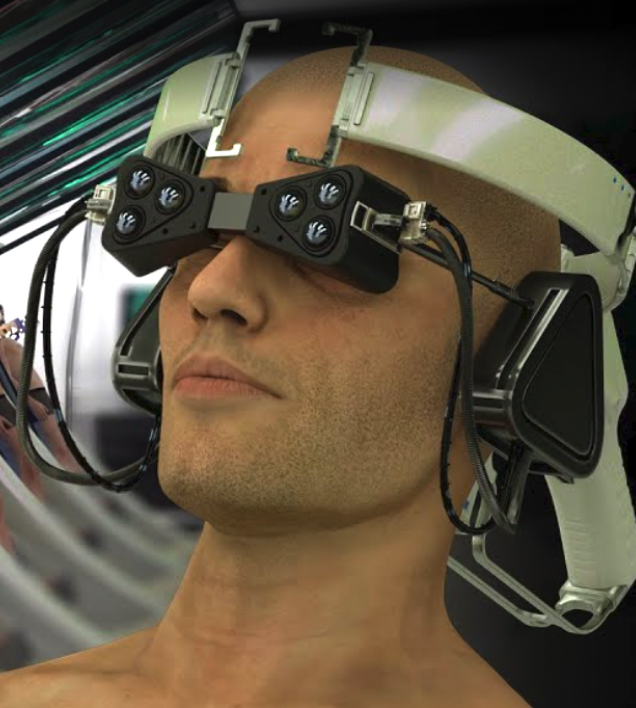
His concept called "Cognify" is designed to treat criminals like patients, by implanting synthetic memories of a person's crime into his brain, and showing them their victim's perspective, through AI and visual reality brain implantation. The headset generates realistic images, sounds, and other sensations that simulate a user's physical presence in a virtual environment, allowing them to interact with that environment in real time.
The system would display AI-generated recordings of the crimes they have committed, combined with brain implants that trigger emotional conditions such as regret or guilt—feelings that some individuals may not be able to produce on their own. The Cognify rehabilitation “meeting” is meant to feel like years to the prisoner, even though it only lasts a few minutes. The memories can be altered to fit the needs of each person's rehabilitation needs.
The artificial memory implanted by Cognify can be “seamlessly embedded into the existing brain's neural tissue, so the subject experiences these "memories" as if they were real.” And, the neural implantation of memories is permanent, through this concept."
That’s what it is though: A concept. But on the other hand…
It’s not a flimsy concept. Not that long ago there were no hand-held computers that took pictures, maintained my calendar, and gave me three ways to communicate across the globe, as I checked out the weather in Bangladesh. So, although the current testing on mice is a long way from human testing, the mouse part is working. And, if you think it could never develop into a treatment for restoration and the attached social benefits, you might think twice.
Working with mice is a beginning, and as weird as it all sounds, if the theory could be tested for safety and it actually worked, I can imagine many people who would trade a 10-year sentence for a 10-minute process. In fact, it could be the answer to so many problems in our society today. Consider the billions of dollars spent on incarceration, the strain on a family when the father or mother is taken away for years at a time, the poverty that is endemic in homes where a parent is incarcerated, and the problem of recidivism that continues in the high 70% after nine years.
Says the developer, “for testing, we need to generate specific videos customized to the memory that we want to implant, and then test them on humans. This technology is coming in,” he says, “society won't be able to stop it.”
We’ll see,
Nancy


